In the age of social media, hypes die out fast, but the internet never forgets. This statement is true both within and without the Great firewall.
GU Yue (谷岳,Kyle G Johnson), a Chinese-American internet personality who rose to fame in the Sinosphere for hitchhiking from Beijing to Berlin was recently caught in a media backlash.
On 7th June, he posted on Weibo, where he had over 2 million followers, to urge Chinese people to reduce consumption of seafood and be “responsible consumers” after he was told by a Madagascar fisherman that fish stocks there have almost dried up.
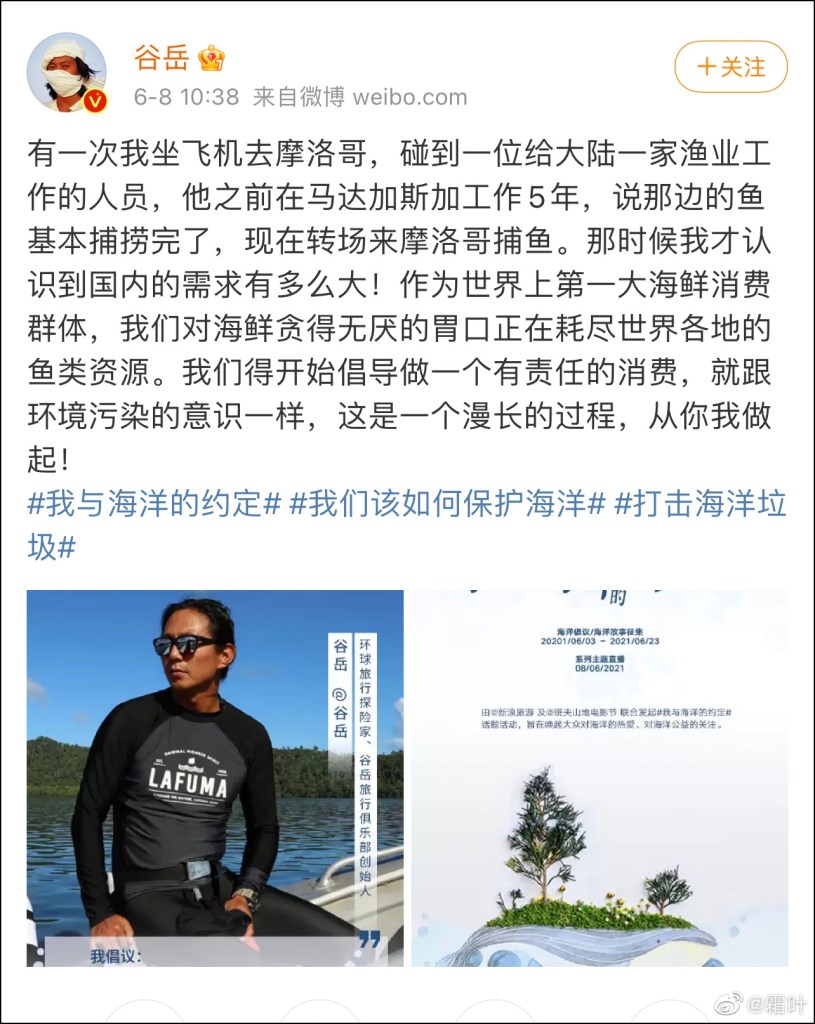
In the post which was later deleted, Gu wrote “as the world’s number one consumer of seafood, China’s insatiable appetite for seafood is depleting fish stocks around the world.”
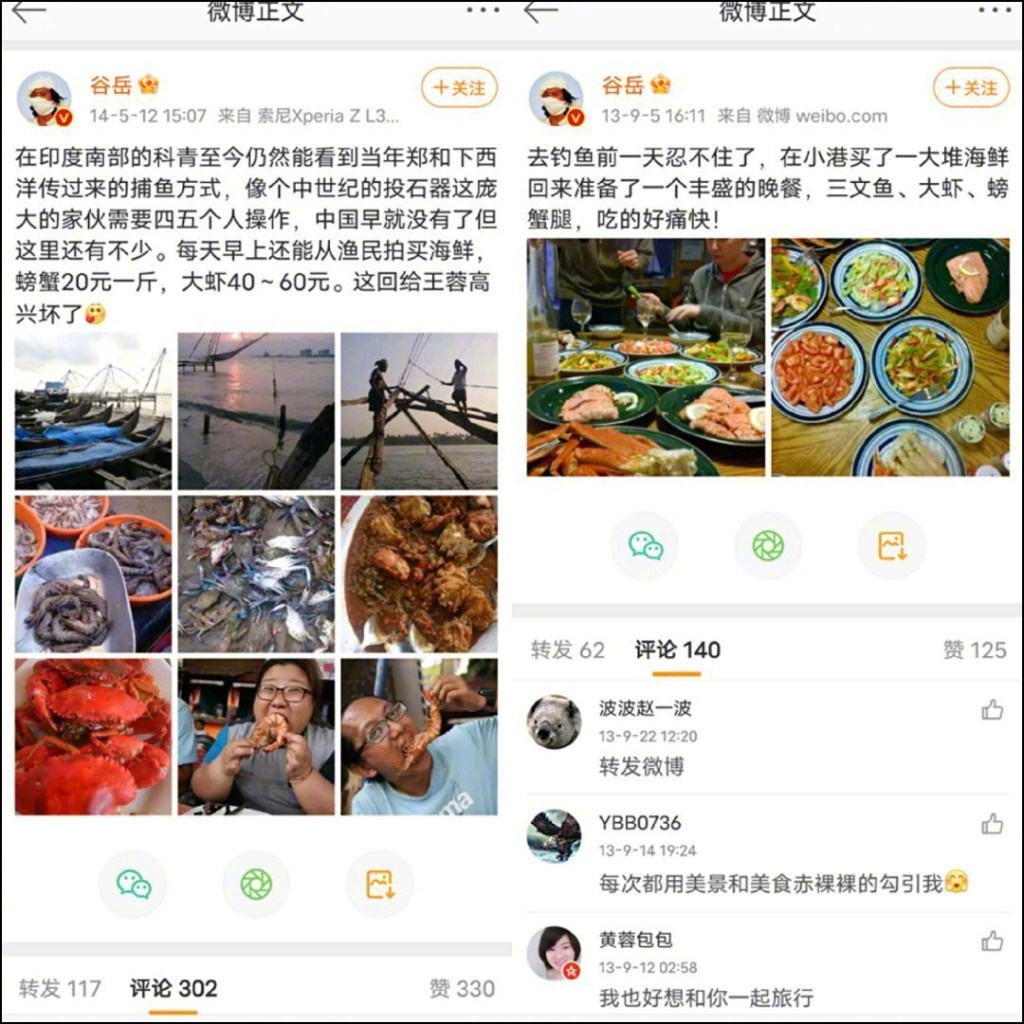
Chinese netizens didn’t take this message well, especially when they found out that Gu was a seafood fanatic, repeatedly posting photos of himself indulging in gourmet seafood as he travelled around the world.
This discovery led to netizens criticising Gu for using double standards when it comes to seafood consumption.
On his Weibo, Gu argues that because China’s development lags behind countries like US and Japan, therefore Chinese people can only reduce their seafood consumption instead of criticising other countries. This further invoked the ire of netizens, who feel that it is unjust and unfair to forbade the Chinese from improving their own lives. They also feel that Gu, as an American citizen, is in no position to to lecture the Chinese.
(GU2)
In the face of overwhelming objections and criticisms, Gu later chose to delete his Weibo posts.
On 18th June, the “seafood controversy” became an even bigger saga, with more Chinese influencers become implicated.
A Chinese influencer team (赛雷话金, Sailei Huajin) on the popular video sharing platform Bilibili posted a video stating that they were previously approached by three foreign NGOs to create a video series on marine conservation. The team claimed that the commission has ulterior motives, to paint China as a threat to marine environment, and dissuade Chinese people to not consume seafood.
In addition, the Chinese influencer team criticised another Chinese video production house Paperclip (回形针) to be under the influence of foreign powers. An ex-employee was found to be working with the US Army, while another was accused of posting anti-China content on Twitter.

This revelation sparked a huge uproar among the Chinese netizens, many felt that they were betrayed by the once-trusted Paperclip team.
State media affiliated to the People’s Liberation Army also joined in, warning netizens should be aware of “conspiracies and malicious intents disguised as popular science”.
In the age of rising Sino-US tension, Chinese netizens are hypersensitive to any attempt at undermining their current way of life and hindering their chance at further improving their living standard.
Comparing to US sanction on Chinese companies, telling a Chinese that he should reduce his meat/seafood consumption is bound to trigger a much fiercer and immediate rebuttal, as the latter is closely related to the everyday Chinese life.
It is virtually impossible to determine if there is really an ulterior motive behind the commissions. The current incident only reflects the deep mistrust Chinese netizens hold against foreign NGOs. Recent news that the US government spied on Merkel and other European leaders only furthered such stereotype.
Combating climate change has been one of the rare areas that a Sino-US collaboration seemed possible. However, in lieu of the “seafood consumption” episode, one can only wonder if this will transform from cooperation into fierce competition too.

 The Sinographer