Seafood consumption and Great Power competition

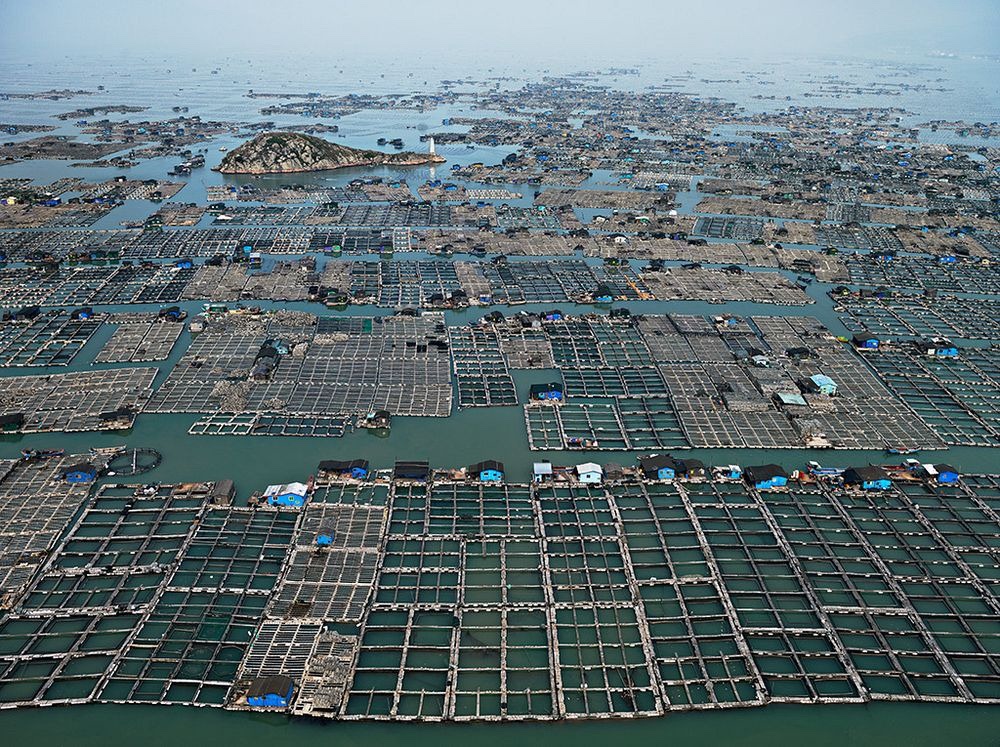
According to UN’s Food and Agriculture Organisation, China is the world’s largest seafood producer. Photo shown is the floating fish farms off the coast of Fujian, China. (Photo credit: Edward Burtynsky)

In the age of social media, hypes die out fast, but the internet never forgets. This statement is true both within and without the Great firewall.

GU Yue (谷岳,Kyle G Johnson), a Chinese-American internet personality who rose to fame in the Sinosphere for hitchhiking from Beijing to Berlin was recently caught in a media backlash.

On 7th June, he posted on Weibo, where he had over 2 million followers, to urge Chinese people to reduce consumption of seafood and be “responsible consumers” after he was told by a Madagascar fisherman that fish stocks there have almost dried up. 
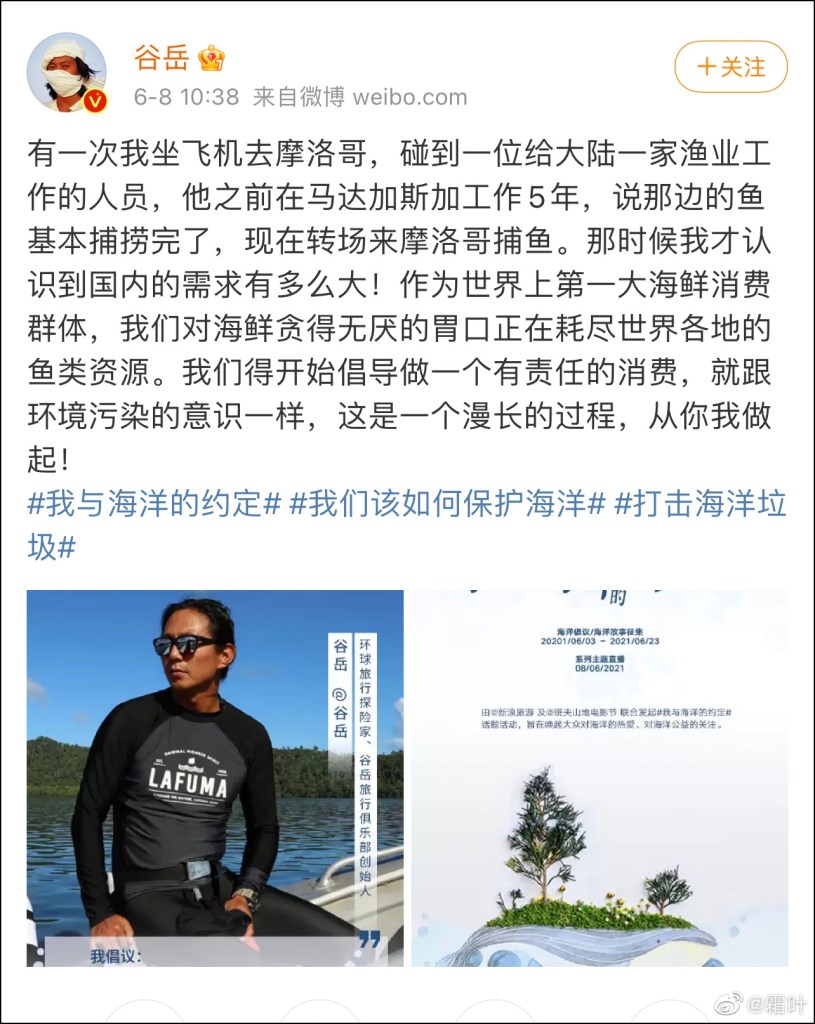
(Chinese-American GU Yue urging Chinese people to reduce their seafood intake on Weibo. (Photo credit: Weibo)

In the post which was later deleted, Gu wrote “as the world’s number one consumer of seafood, China’s insatiable appetite for seafood is depleting fish stocks around the world.”

Chinese netizens didn’t take this message well, especially when they found out that Gu was a seafood fanatic, repeatedly posting photos of himself indulging in gourmet seafood as he travelled around the world.

This discovery led to netizens criticising Gu for using double standards when it comes to seafood consumption.

On his Weibo, Gu argues that because China’s development lags behind countries like US and Japan, therefore Chinese people can only reduce their seafood consumption instead of criticising other countries. This further invoked the ire of netizens, who feel that it is unjust and unfair to forbade the Chinese from improving their own lives. They also feel that Gu, as an American citizen, is in no position to to lecture the Chinese.

(GU2)
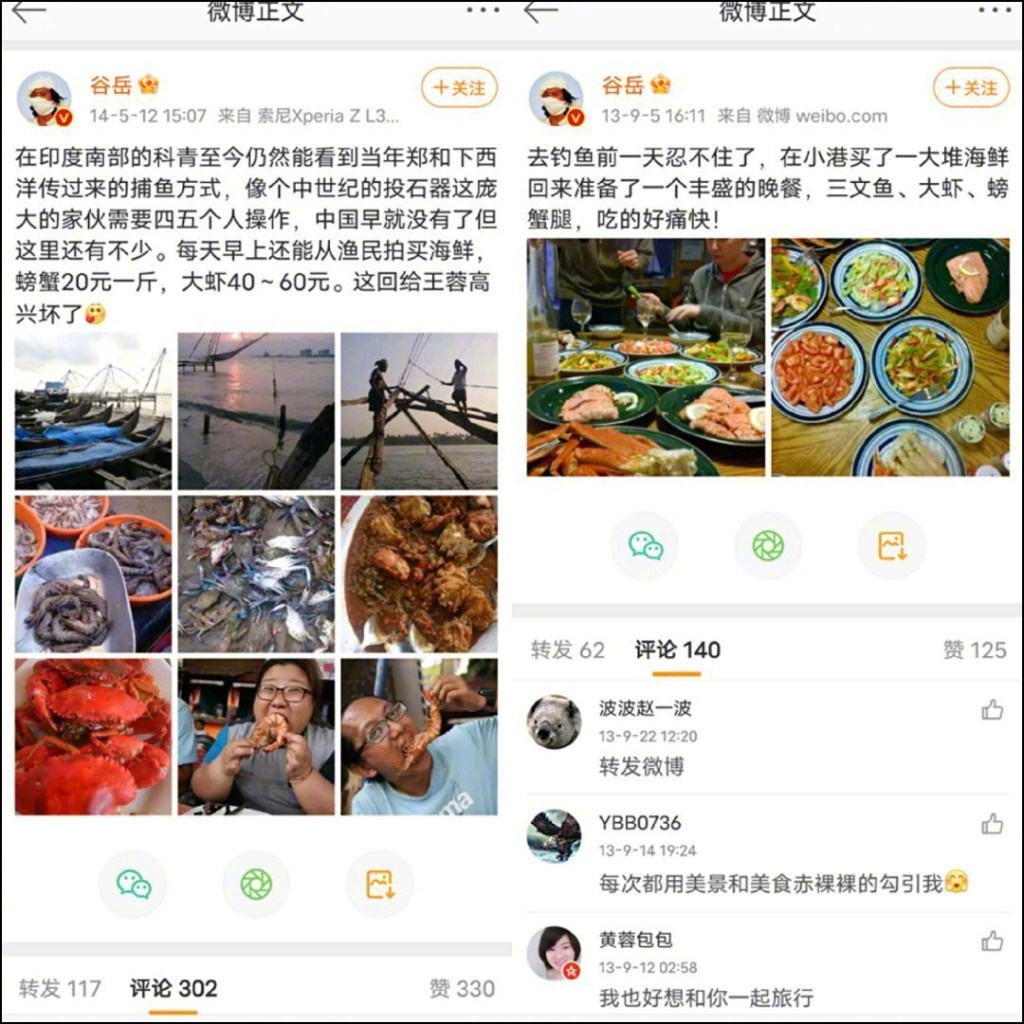
Chinese netizens found photos of Gu indulging in seafood as he travelled around the world, hence accusing him of using double standards. (Photo credit: Weibo)

In the face of overwhelming objections and criticisms, Gu later chose to delete his Weibo posts.

On 18th June, the “seafood controversy” became an even bigger saga, with more Chinese influencers become implicated.

A Chinese influencer team (赛雷话金, Sailei Huajin) on the popular video sharing platform Bilibili posted a video stating that they were previously approached by three foreign NGOs to create a video series on marine conservation. The team claimed that the commission has ulterior motives, to paint China as a threat to marine environment, and dissuade Chinese people to not consume seafood.

In addition, the Chinese influencer team criticised another Chinese video production house Paperclip (回形针) to be under the influence of foreign powers. An ex-employee was found to be working with the US Army, while another was accused of posting anti-China content on Twitter.

An ex-employee of the Chinese video production team Paperclip was accused of being working with the US Army. (Photo credit: Internet)

This revelation sparked a huge uproar among the Chinese netizens, many felt that they were betrayed by the once-trusted Paperclip team.

State media affiliated to the People’s Liberation Army also joined in, warning netizens should be aware of “conspiracies and malicious intents disguised as popular science”.

In the age of rising Sino-US tension, Chinese netizens are hypersensitive to any attempt at undermining their current way of life and hindering their chance at further improving their living standard.

Comparing to US sanction on Chinese companies, telling a Chinese that he should reduce his meat/seafood consumption is bound to trigger a much fiercer and immediate rebuttal, as the latter is closely related to the everyday Chinese life.

It is virtually impossible to determine if there is really an ulterior motive behind the commissions. The current incident only reflects the deep mistrust Chinese netizens hold against foreign NGOs. Recent news that the US government spied on Merkel and other European leaders only furthered such stereotype.

Combating climate change has been one of the rare areas that a Sino-US collaboration seemed possible. However, in lieu of the “seafood consumption” episode, one can only wonder if this will transform from cooperation into fierce competition too.

Biden, the G7, and Arm-barring China

There is a famous move in combat sport (specifically Judo, Brazilian Jujitsu, MMA) called the juji-gatame (arm bar).

In this move, the practitioner secures an arm at the wrist of the opponent, trapping it by squeezing the knees together. This technique can easily hyperextend the opponent’s elbow, leading to serious damage to muscle, ligament, tendon, and even dislocation of the joint, or bone fracture.

The principle behind the move is using the opponents weak spots (joints) as a point of leverage to amplify the pressure applied, with the ultimate goal of forcing into submission.

A juji-gatame being used in competition. (Source: Internet)

In the context of current affairs and international relations, the recently concluded G7 Summit, NATO Summit, and the meeting between US and Russian Presidents can be seen as a series of moves taken by US President Joe Biden leveraging different pressure points against China, with the ultimate goal of forcing Beijing onto its knees.

Why such an analogy?

In combat sports, grappling techniques are most useful when two fighters are of equal weight-class and evenly matched in skills. With the utilisation of such techniques, both would be entangled, wrestling with each other on the floor.

Just like two fighters wrestling on the floor, US and China have been increasingly entangled economically over past four decades, until threats of decoupling emerged in the 2018 trade war. Each is trying to gain the upper hand against the other.

Needless to say, US got the upper hand in the initial round, with sanctions against Chinese tech companies such as Huawei inflicted a huge blow to Chinese tech development.


However, the COVID-19 pandemic brought about an unexpected pause in the wrestling match. China recovered first and regained its stance fast.

Now, in his first trip abroad, Biden has met with leaders of UK, G7, NATO, and Russia in this order within a week. He has yet to arrange for a leaders summit with his Chinese counterpart. The intention of establishing a united front against Beijing has become quite apparent.

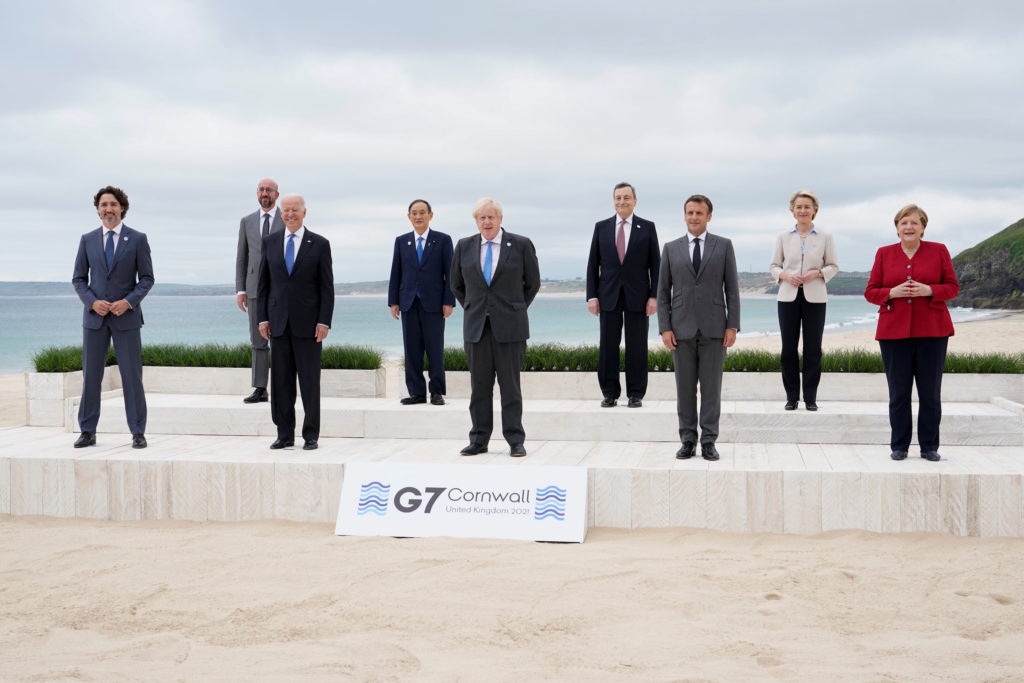
Leaders of G7 and EU meet in Cornwall in June 2021. (Source: AP)

Observers noted that Biden’s meeting with the UK prime minister Boris Johnson, and the signing of the “New Atlantic Charter” represented the two countries’ renewed effort at establishing closer ties post-Brexit. Others pointed out that these two events took place right before the G7 Summit, suggesting that US is collaborating with the UK to push for agenda fitting the two countries’ goal during the summit

News reports on the G7 summit hinted at internal disagreements between US and the rest of the group. Evidently Biden tried to persuade the group to take a harder and firmer stance against China, on issues ranging from COVID-19 investigations to human rights. However, his effort was met with resistance from his European counterparts, specifically Emmanuel Macron and Angela Merkel.

Nevertheless, the published version of the G7 communique has been described as the toughest stance the group has publicly taken against China to date. It seems that other members of the G7 appear to have heeded US’s call to take a firmer stand against Beijing.

Riding on the waves of successful negotiations at the G7 and NATO Summit, Biden is planning to meet with Russian president Putin at Geneva today (16th June). It is worth noting that prior to the meeting, Russia and China racked high praises for strong ties between the two countries.

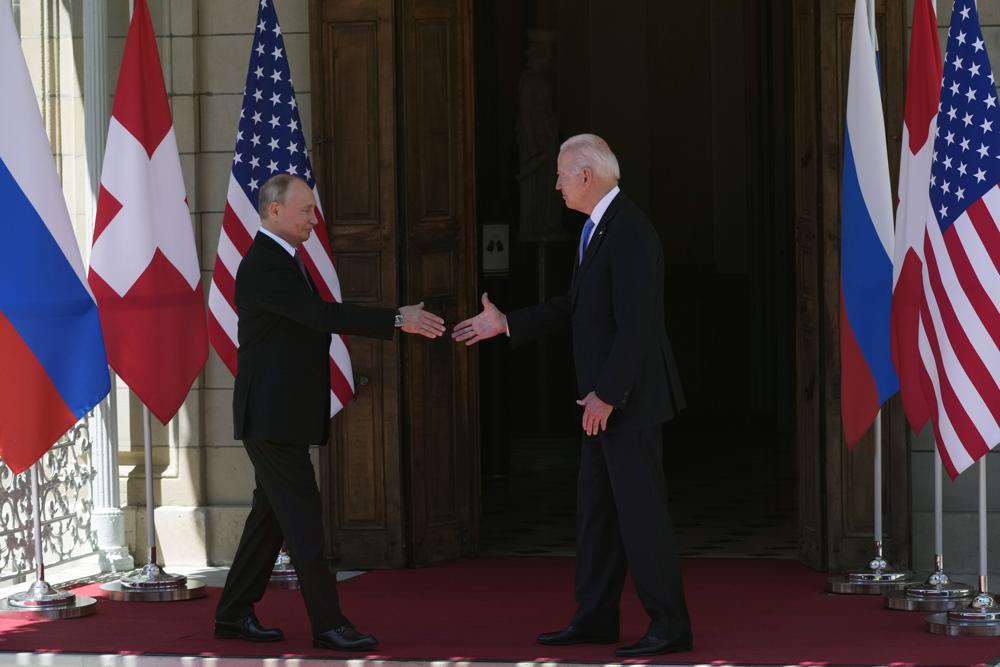
US President Joe Biden (R) meets with Russian President Vladimir Putin (L) in Geneva, Switzerland on 16th June 2021. (Source: AP)

Chinese observers meanwhile worried that Russia is the last piece of domino in Biden’s effort to counter China. Biden has previously waived part of the US sanctions on the Nord Stream 2 gas pipeline that once completed, will provide an alternative route for Russia to supply energy to Europe without going through Ukraine. This is interpreted as a sign of good will for US to improve its relationship with Russia.

If US-Russia relationship begin to thaw after the 16th June meeting, the US would be less strained on the European front. Meaning that it can reallocate more resources to East Asia to counter China. then this would be akin to US applying additional force in a geopolitical juji-gatame hold on China, putting more pressure on Beijing to force it to yield.

A way to counter the juji-gatame is to roll towards the instigator, to prevent the trapped joint from hyperextension.

What can Beijing do to counter Biden’s move? Some suggest that it is wise to withhold the urge of immediate counter action, as it would only further degrade China’s international image, playing into the hands of Beijing’s opponents that China is a malevolent, “wolf warrior” like actor on the international stage.

Instead, Beijing should focus on dealing with internal issues such as ageing population, income inequality, and developing its less well-off regions in the west. The Chinese consensus remains in firm belief that the West is in an inevitable decline while the East is on the rise. This may be of some truth, but the world is constantly changing, who knows what holds in the international stage tomorrow?

A juji-gatame escape. (Source: Internet)