Alibaba: Time to sober up?

Another day, another sexual crime, another round of social media outburst

The Chinese internet went ablaze on 8th August, not for a fantastic result at the Olympic Games (more on that coming up), but furious at yet another sexual crime whose victim turned to Weibo after her pleas fall on deaf ears in internal channels. The perpetrator this time? An Alibaba executive.

An unidentified female employee of Alibaba accused her manager and a client of sexual assault during a work trip to Jinan, Shandong in Eastern China on 27th July.

The manager was accused of purposefully getting the victim drunk during dinner and sexually assaulting her when they return to her hotel room.
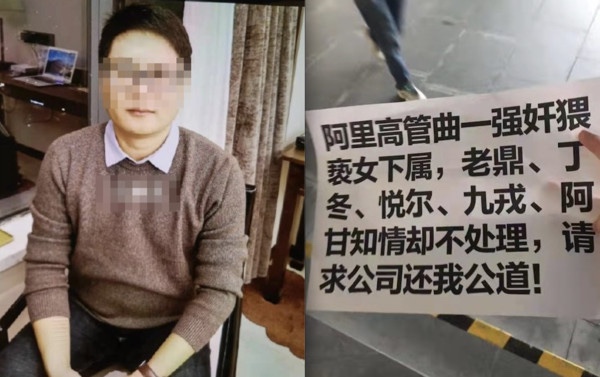
The accused (L) and the victim’s flyer complaining about Alibaba’s inaction on the matter. (Source: Internet)

CCTV footage showed that after sending the victim back to her room with another female companion, the manager pretended to leave the hotel, before returning to the front desk to obtain another room card of the victim’s room, using it to enter her room four times.

By the victim’s account, she woke up the next morning naked, with no recollection of the past night. She also found her undergarments to be missing, and a used condom packaging in the room.

She immediately made a police report, and obtained CCTV footages from the hotel.

(Update: on 12th August, local police released the preliminary findings of the incident, confirming victim’s account that she was sexually assaulted by both her manager and one of the client. Both men have been arrested under the charge. However, police also state that there is “no evidence that rape occured”. Speculations suggest that the “no evidence of rape”statement could be due to both men removed crucial evidence from the scene that could support rape charge. Case is under further investigation.)
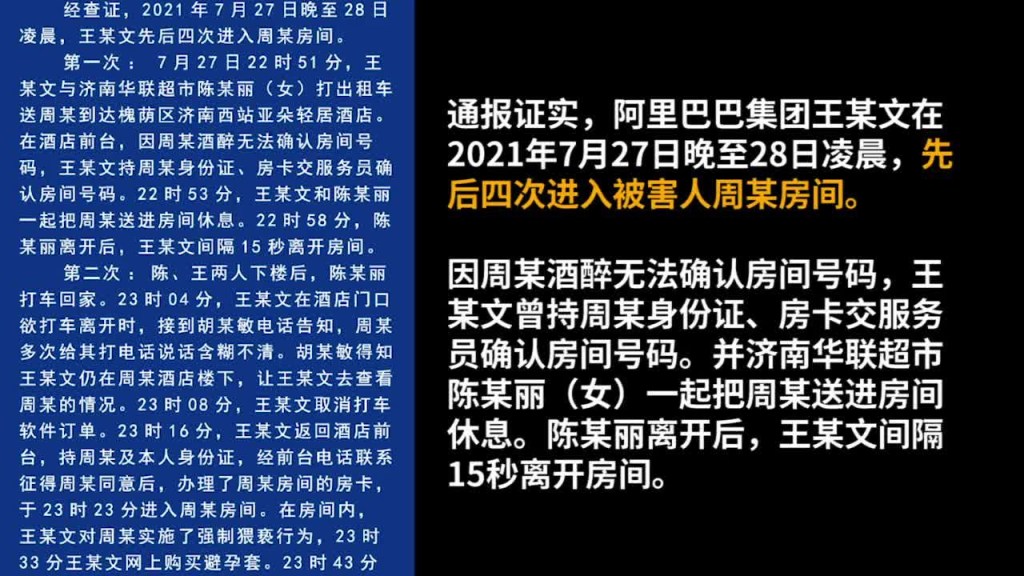
Preliminary finds from the police was released to the public on 14th August. (Source: Internet/Weibo)

After the incident happened, the victim brought up the matter internally to various levels of management but to no avail.

Desperate for justice and answer, the victim first distributed flyers in Alibaba’s canteen to press higher management for a response, but she was stopped by security personnel. Shortly after, she posted her ordeal and the company’s non-response on Weibo, thus sparking a new round of criticism against Alibaba.

According to Chinese media reports, Alibaba first issued a statement late at night on 7th August, 10 days after police report has been made. In the brief boilerplate statement, Alibaba revealed that while police investigations are ongoing, the relevant employee has been suspended for violating company policies and values, and internal investigation has begun.

This statement only incurred even greater wrath from the society, many netizens felt that Alibaba showed no compassion nor sincerity, the statement was only an act to put out the fire after things blew up.

The next day, Jack Ma’s successor, Alibaba CEO Daniel Zhang issued an internal memo to staff condemning the attack and the company’s initial handling of the complaint. He said internal investigations found the accused had confessed to “intimate acts” with the woman while she was intoxicated, violating company policy.

In addition, Daniel Zhang expressed his “shock, anger, and shame” at the incident. However, netizens did not accept this statement, instead mocking him for expressing his “shock, anger, and shame” 10 days too late, only after the incident caused huge public anger.
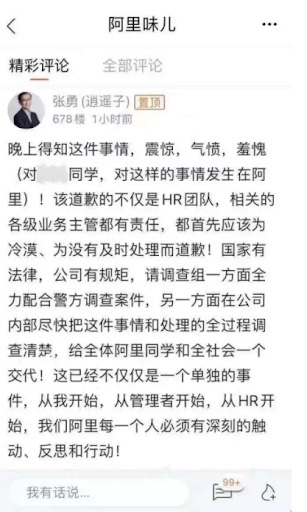
Daniel Zhang’s response to the incident only incurred more anger. (Source: Internet)

Drinking culture is to blame?

Criticisms surrounding this case focused on three main areas: Drinking culture in the Chinese business context, Alibaba’s slow response, and the inappropriate “orientation culture” in Chinese tech giants.

Firstly, on the drinking culture in Chinese business world.

The victim reported that she was first forced to go on the ill-fated work trip by the suspect during typhoon weather. On the last day of the work trip, the suspect to her to a dinner gathering with the local partners, where she was coerced to drink with the local partners that ultimately led to her inebriation and being assaulted.

After the incident happened, senior management in Alibaba told the victim that she was expected to drink with clients and partners to maintain relationships or to secure deals. In addition, she was also being informed that the company prefer to hire male employees over female employees to avoid similar incidents.

Debates on such drinking cultures are long present in the sinopshere. Business dinners is a grey area, where personal desires met with public interest. Many sees it as a legacy from the old days, where coercing a junior staff or business partner to drink and to get drunk on the dinner table is equivalent to one’s position of power and command.

The current incident once again brought about more criticisms on the drinking culture. Many sees it as sexism in nature, archaic, and disrespectful to individuals regardless of gender. Most netizens certainly did not expect it to happen to a company like Alibaba.
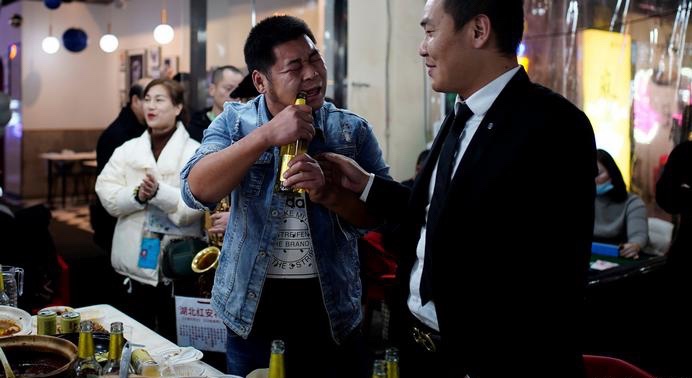
Junior and female staffs were often coerced to drink at business dinners, as a sign of obedience. (Source: Reuters)

Secondly, Alibaba’s response is another area of criticism.

Netizens are unhappy with the company’s slow and indifferent boilerplate statements on the issue.

Even from within the company, non-managerial staffs have been voicing their displeasure on Alibaba’s internal forums and chat groups, targeting their anger at the middle management level, where the accused and his immediate supervisor belong.

Many drew comparison between Alibaba’s response in this incident with the 2016 Mooncake incident, where 4 software engineers were fired within 24 hours after they were found using bots to horde Alibaba’s Mid Autumn Festival mooncake gifts. Alibaba then issued a statement affirming that employees should uphold the highest moral standards.

Coupled with how lightly Alibaba treated Taobao/Tmall CEO Jiang Fan’s sexual scandal in 2020, netizens hence mocked Alibaba’s moral standard with the elasticity of rubber band, going harsh on lower level staffs but extremely lenient on management level.

Thirdly, The current incident also drew attention (and criticism) on the “orientation culture” that is present in Chinese tech giants like Alibaba and Tencent.

“Orientation culture” is eerily similar to hazing activities present in fraternity initiations or university orientations. In this case, new hires are asked to perform intimate tasks with their colleagues in the name of “bonding”. These tasks are often sexually explicit, and generally causes discomfort in the participants.

In addition, accounts of such “orientation” events also revealed that participants are often asked personal questions that’s bound to make them feel uncomfortable or offended. The questions, again, often revolve around individual’s sexual experiences.疼

Past incidents

Chinese companies are not without their share of misconducts, affairs, and morally ambiguous actions. In 2018, another Chinese internet giant JD was involved in what could be its largest PR crisis till date — its founder Liu Qiangdong (Richard) was arrested in Minneapolis on accounts of rape.
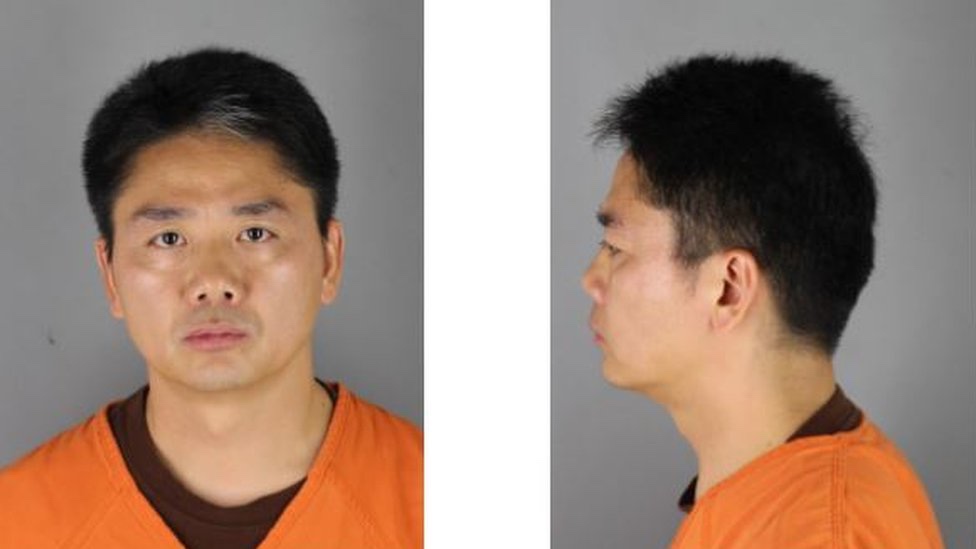
Liu Qiangdong’s mug shot in 2018 after his arrest. (Source: Internet)

The accusations were similar to the Alibaba case today — a Chinese university student was invited to a dinner party with Liu. She was subsequently inebriated and returned to her apartment with Liu, a married man, where they had sex.

Liu Qiangdong was then accused of rape, and arrested by the local police. However, after a length legal procedure, prosecutors decided not to proceed with the rape charge, the complainant also indicated her preference of receiving a hefty sum of compensation from Liu and JD to settle the case out of court.

What could happen next?

More importantly, before this incident happened, Alibaba has always been seen as a figure of progressiveness and modernity amongst the Chinese. The current incident tears down the facade of equality and respectfulness, revealed that the 250,000 strong conglomerate’s company culture is far from what it seems.

Nevertheless, this incident and public backlash came at the worst possible timing for Alibaba. Since October 2020, Jack Ma and Alibaba has been under fire from the central government and Chinese regulators. Ant Group, a fintech unicorn founded on the success of Alibaba’s Alipay service, originally planned to go public in Hong Kong and mainland China in Nov 2020. However, the IPO was rejected by Chinese regulators at the eleventh hour. In addition, Alibaba was slapped a hefty fine ($2.8B USD) from the regulators early 2021 on the account of monopoly and market-controlling behaviours.

More importantly, Chinese netizens have been voicing their increasing displeasure against Alibaba recently. The once pride and joy of China’s technology advancement and symbolism of Chinese nationalism has turned into an embodiment of modern day tech-driven capitalism that enslaves the society.

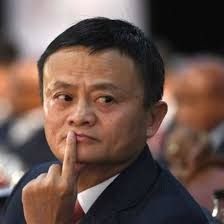
Stories of how Alibaba employees have to work from 9am to 9pm, 6 days a week led to the birth of the term “996”. Jack Ma once publicly commented that “996”should be considered as a blessing instead of oppression and exploitation, further adding to the ire of Chinese netizens.
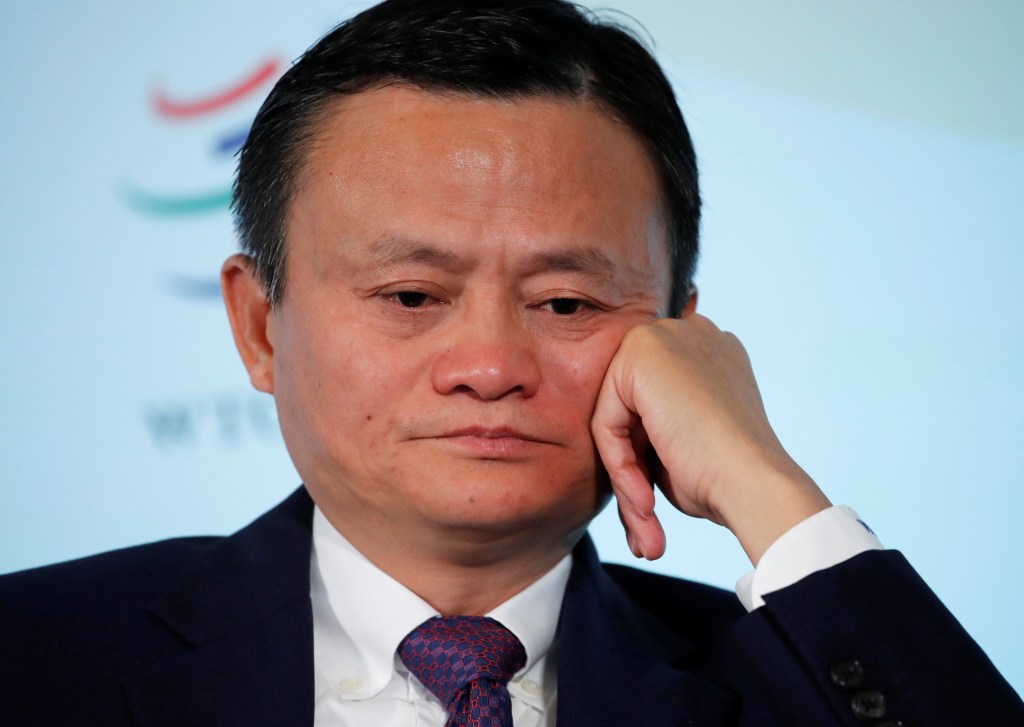
It all started with Jack Ma claiming that a “996” work culture is a blessing. (Source: Internet)

Then again, we should also take heed that everything that’s on the internet might not reveal the whole truth. Claims from both parties should be carefully examined to reach an unbiased conclusion. While police investigations are ongoing, there have been alternative accounts of the incident surfacing, alleging that the whole incident might contain exaggerations, and that the victim actually “gave consent” for the accused to enter her room on that night.

Regardless of what actually happened on that night, public sentiment and official stand are not on Alibaba’s side.
Patience is a virtue on the internet

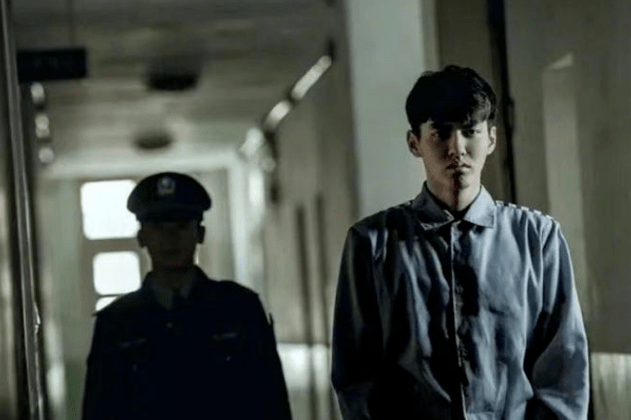
Beijing police confirms that the Canadian-Chinese celebrity Kris Wu (R) has been remanded on rape charges. (Source: Internet/Set photo)

An unsurprising update

As mentioned in this site previously, patience is a virtue on the internet, especially when it comes to topics that are controversial, sparks wide public interest and debate.

A Chinese-Canadian celebrity Kris Wu was accused of engaging in various sexual misconduct and criminal acts in China. Netizens were furious at the news, flooding his social network account with angry messages and calls to boycott him.

On 23rd July, an official statement provided more credible insights into the saga, which come at a surprise for both sides.

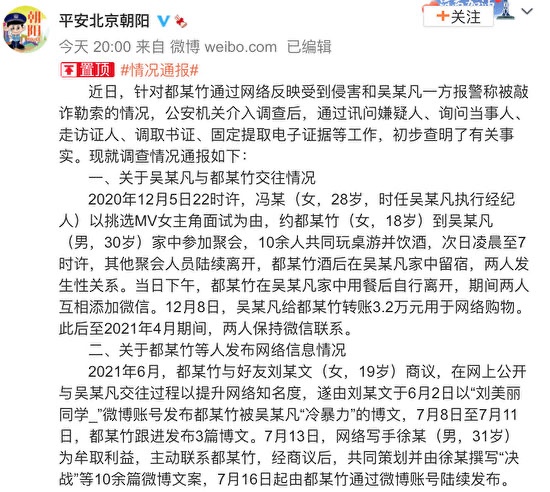
Screen cap of official findings published on 23 July 2021. (Source: Weibo)

Official findings suggested the presence of a third party, which neither Kris Wu nor the victim is aware of.

The third party acted as a middle man, pretending to be on the victim’s side when in touch with Kris Wu’s team, and vice versa.

His goal: to con Kris Wu’s team for a large sum of hush fee.

However, the scheme did not materialise, as Kris Wu’s team directly wired the money to the victim’s bank account, without going through this third party.

The police statement concludes by mentioning that “further investigations are ongoing”, suggesting that troubles are just beginning for Kris Wu.

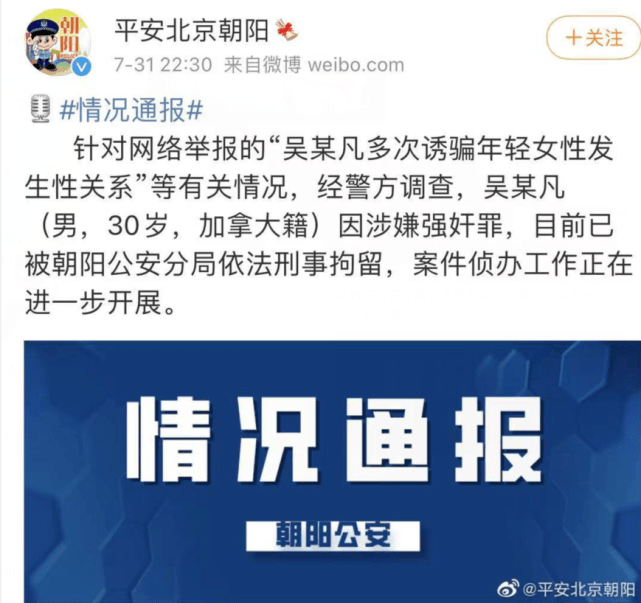
Fast forward to 30th July. Chaoyang district police force published another official statement, this time much shorter than the previous one.

The police confirmed that Kris Wu has been arrested on rape suspicion and he is now under custody.

Police updates on 31st July 2021. (Source: Weibo)

The actual term used is “刑事拘留” (XingShiJuLiu) “under criminal custody”, suggesting that the police have substantial evidence to support the corpora delicti of the case.

Also, Kris Wu is Canadian, thus he has a high chance of absconding given the severity of the case.

Under Chinese law, if convicted of rape, Kris Wu could face a sentence between 3 to 10 years.

Implications

Previously when accusations about the sex scandals just broke, Kris Wu already lost all his endorsements in mainland China, where his main market is. The brands involved include some of the big names such as LV, Tencent, among others.

After the confirmation of his arrest, one of China’s largest SNS, Weibo, took down Kris Wu’s super-thread channel (微博超话), effectively signalling the end for Kris Wu’s entertainment career.

Apart from Weibo, Kris Wu has been boycotted from the Chinese internet. In place of his name, a serial number 133700 is used. Netizens suspect that this is his identification number in custody.

Further implications

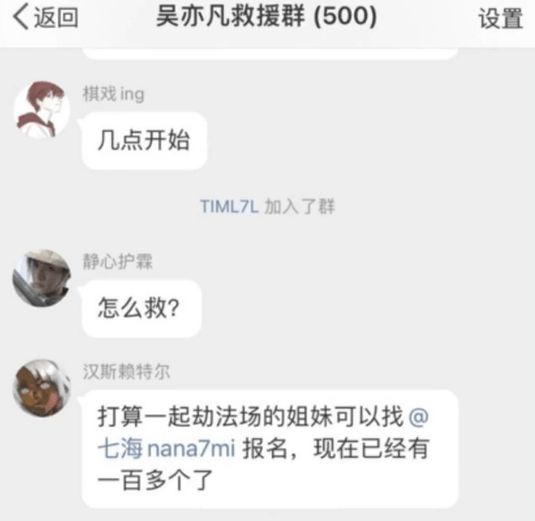
On the other hand, die hard fans of Kris Wu who refuse to accept his remand, called for drastic actions to secure his release.

In private chat groups and chat rooms, suggestions such as storming the remand centre to break him out of custody are zealously suggested and promoted.

This led to top-level criticism from the national state council on the audacity of fans, which suggest a cracking down of such zealot-like mindset surrounding celebrities is in the process.

Die hard fans of Kris Wu plotting to break him out of police custody. (Source: WeChat)

What could happen next?

Legal process will take a long time, but given the public attention on the case, and Kris Wu’s status as a Canadian citizen, there would be official updates on every stage.

Official media such as Xinhua news agency, People’s Daily have voiced out their opinion on the issue. People’s Daily published a strong-worded status on Weibo, stating that nationality shouldn’t be one’s “Get out of jail” card, clearly addressing Kris Wu’s citizenship issue on his legal case.

Nevertheless this not only spells the end of Kris Wu’s entertainment career, but could also be the start of another round of crackdown on “celebrities with low moral standards” by the Chinese authority.

In addition, this incident once again revealed the enormous raw power possessed by the Chinese netizens. Their sentiments could effectively influence policies and determine the life and death of celebrities and businesses. Conversely, netizen’s opinions (within and without China) can be manipulated, influenced, and directed with the right strategy and tool.

Governments around the world are aware of this, and we can see efforts at limiting and even preventing tech giants from gaining too much sway over public opinions through various platforms and channels.

Of course this limits one’s liberty and freedom of expression. However, letting platforms such as Twitter, Facebook, Weibo, Tencent run their respective platforms without regulation does not lead to a brave new world too. A balance need to be struck between the two sides, so that individual members of the society can truly express themselves with the greatest freedom.

Seafood consumption and Great Power competition

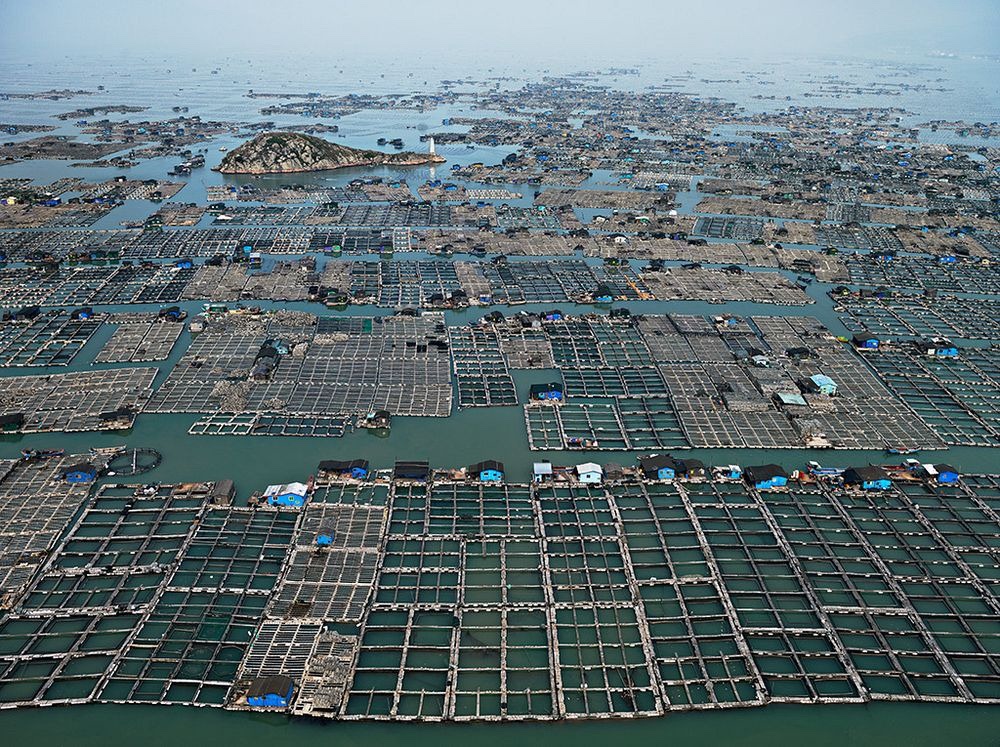
According to UN’s Food and Agriculture Organisation, China is the world’s largest seafood producer. Photo shown is the floating fish farms off the coast of Fujian, China. (Photo credit: Edward Burtynsky)

In the age of social media, hypes die out fast, but the internet never forgets. This statement is true both within and without the Great firewall.

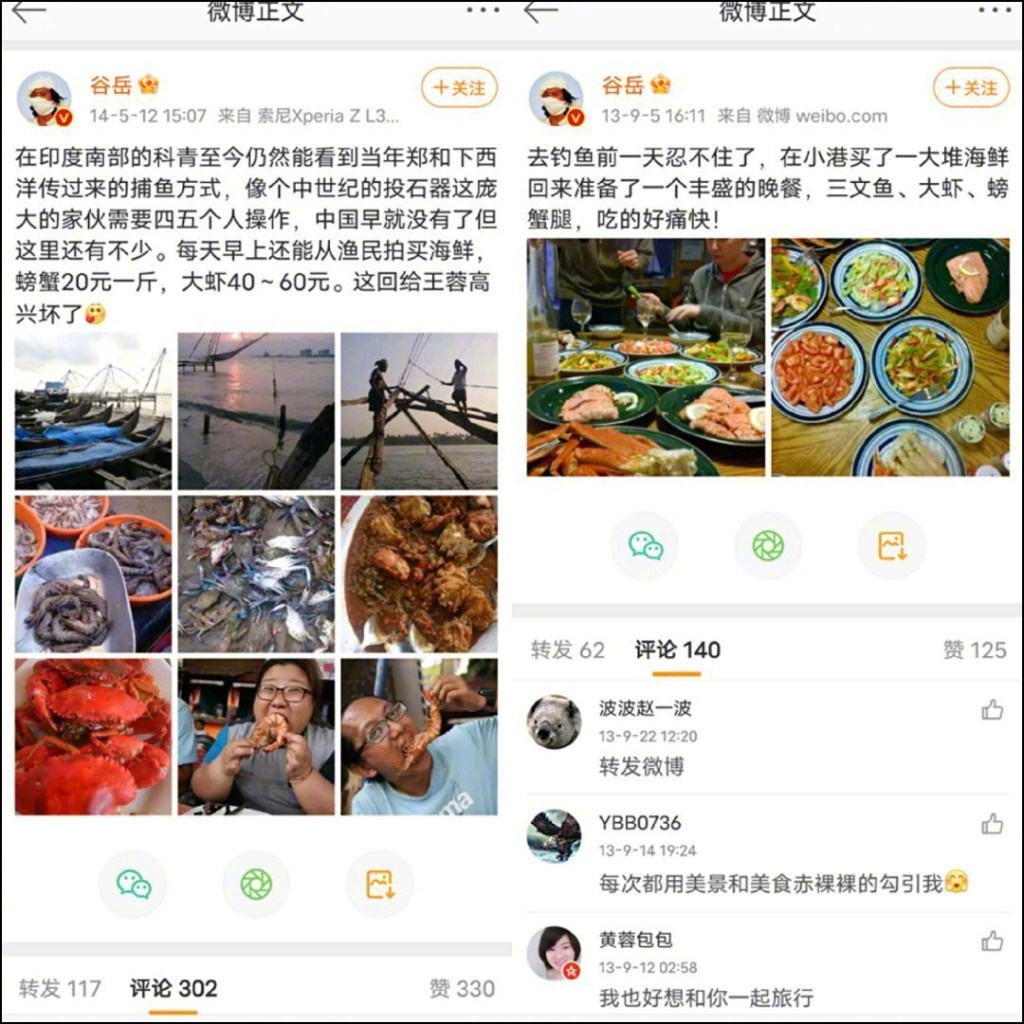
GU Yue (谷岳,Kyle G Johnson), a Chinese-American internet personality who rose to fame in the Sinosphere for hitchhiking from Beijing to Berlin was recently caught in a media backlash.

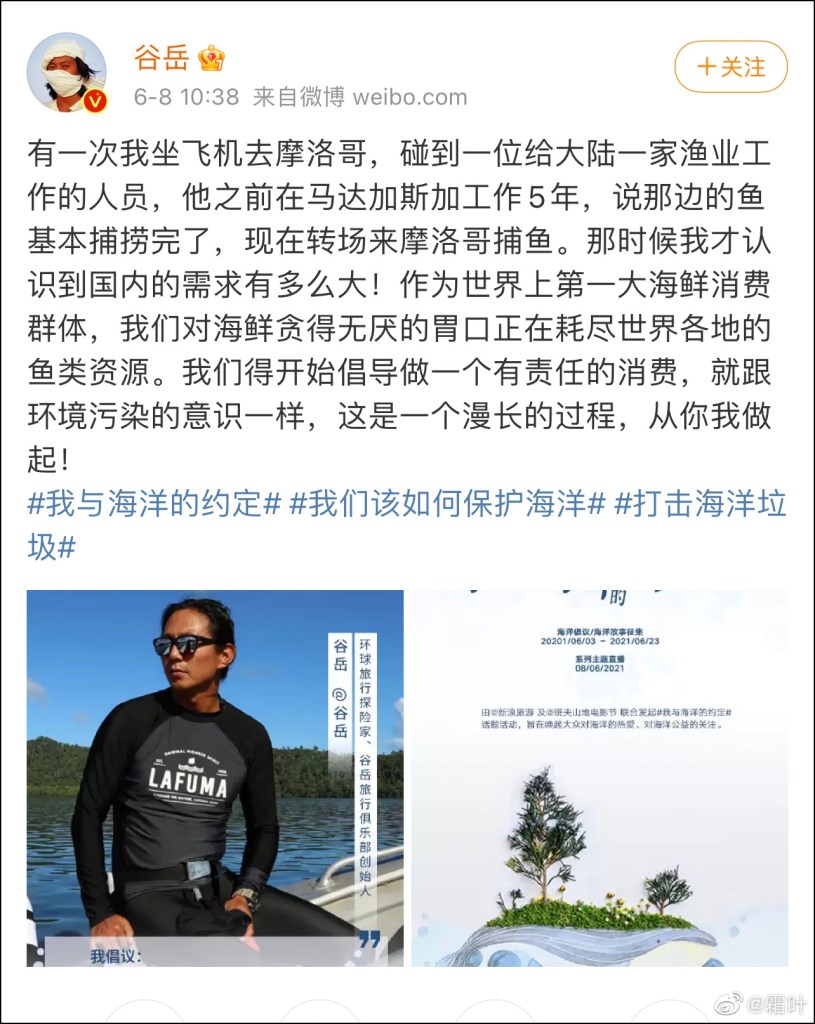
On 7th June, he posted on Weibo, where he had over 2 million followers, to urge Chinese people to reduce consumption of seafood and be “responsible consumers” after he was told by a Madagascar fisherman that fish stocks there have almost dried up. 

(Chinese-American GU Yue urging Chinese people to reduce their seafood intake on Weibo. (Photo credit: Weibo)

In the post which was later deleted, Gu wrote “as the world’s number one consumer of seafood, China’s insatiable appetite for seafood is depleting fish stocks around the world.”

Chinese netizens didn’t take this message well, especially when they found out that Gu was a seafood fanatic, repeatedly posting photos of himself indulging in gourmet seafood as he travelled around the world.

This discovery led to netizens criticising Gu for using double standards when it comes to seafood consumption.

On his Weibo, Gu argues that because China’s development lags behind countries like US and Japan, therefore Chinese people can only reduce their seafood consumption instead of criticising other countries. This further invoked the ire of netizens, who feel that it is unjust and unfair to forbade the Chinese from improving their own lives. They also feel that Gu, as an American citizen, is in no position to to lecture the Chinese.

(GU2)

Chinese netizens found photos of Gu indulging in seafood as he travelled around the world, hence accusing him of using double standards. (Photo credit: Weibo)

In the face of overwhelming objections and criticisms, Gu later chose to delete his Weibo posts.

On 18th June, the “seafood controversy” became an even bigger saga, with more Chinese influencers become implicated.

A Chinese influencer team (赛雷话金, Sailei Huajin) on the popular video sharing platform Bilibili posted a video stating that they were previously approached by three foreign NGOs to create a video series on marine conservation. The team claimed that the commission has ulterior motives, to paint China as a threat to marine environment, and dissuade Chinese people to not consume seafood.

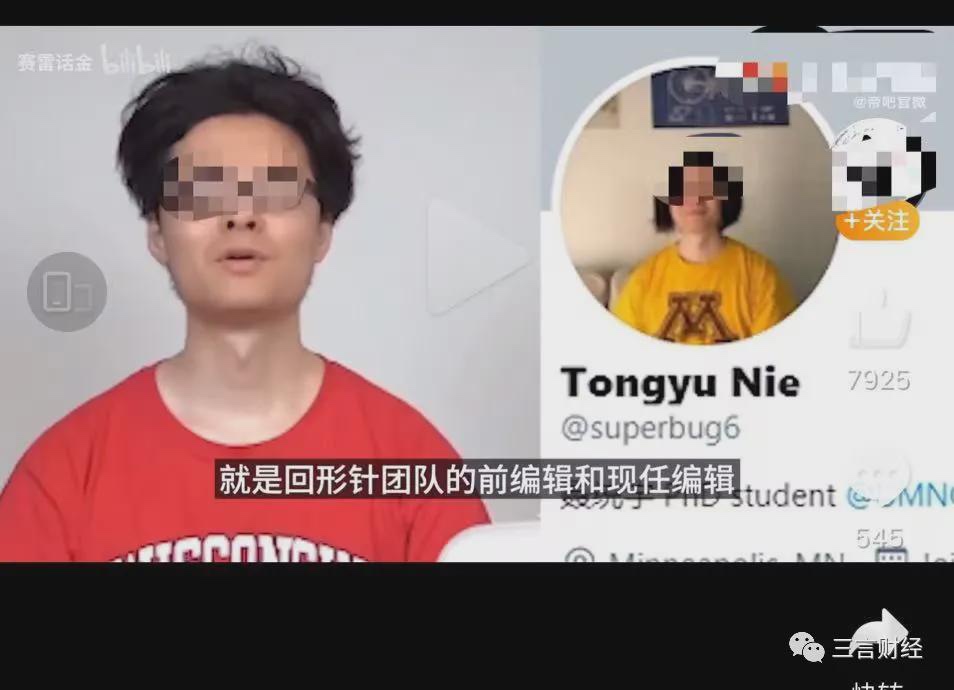
In addition, the Chinese influencer team criticised another Chinese video production house Paperclip (回形针) to be under the influence of foreign powers. An ex-employee was found to be working with the US Army, while another was accused of posting anti-China content on Twitter.

An ex-employee of the Chinese video production team Paperclip was accused of being working with the US Army. (Photo credit: Internet)

This revelation sparked a huge uproar among the Chinese netizens, many felt that they were betrayed by the once-trusted Paperclip team.

State media affiliated to the People’s Liberation Army also joined in, warning netizens should be aware of “conspiracies and malicious intents disguised as popular science”.

In the age of rising Sino-US tension, Chinese netizens are hypersensitive to any attempt at undermining their current way of life and hindering their chance at further improving their living standard.

Comparing to US sanction on Chinese companies, telling a Chinese that he should reduce his meat/seafood consumption is bound to trigger a much fiercer and immediate rebuttal, as the latter is closely related to the everyday Chinese life.

It is virtually impossible to determine if there is really an ulterior motive behind the commissions. The current incident only reflects the deep mistrust Chinese netizens hold against foreign NGOs. Recent news that the US government spied on Merkel and other European leaders only furthered such stereotype.

Combating climate change has been one of the rare areas that a Sino-US collaboration seemed possible. However, in lieu of the “seafood consumption” episode, one can only wonder if this will transform from cooperation into fierce competition too.

A hog and the Chinese college entrance exam

The famous (or infamous) Chinese national college entrance exam (gaokao) ended last Tuesday (June 8th).

Once again, this annual event occupied most headlines in the Chinese media sphere. In the meantime, it also generated intense discussions online on the fairness and relevance today.

Just days before the start of gaokao, a student roused national debate in a public speaking reality show when he described himself as a “countryside hog determined to ruin cabbages in the city”.

In the Chinese social context, “hog ruining cabbage” carries a negative connotation, referring to a man (the hog) marrying or dating out of his social class, with someone who is more privileged (the cabbage).

The 17 years old student, Zhang Xifeng, is sitting in this year’s gaokao. He described his humble upbringing, and the hardships he went through to prepare for the national exam. Zhang is a student in the (in)famous examination-mill Hengshui High School in Hebei province. The school is famous for its emphasis on student performance, it enforces spartan-like routines to prepare students for gaokao.

Zhang defended the school’s result oriented approach, stating that he and his fellow schoolmates put their lives on the line every day while studying, the ultimate goal is to get a good grade in gaokao, enter a prestigious university, and “change our destiny”.

He then went on to make the “hog ruining cabbage” comment, stating that he has learned to accept his past hardships, and hope his classmates would one day achieve the same mentality.

Zhang’s comment made its way to various Chinese social network platforms, where it has been criticised of being sexist. However, netizens who resonate with Zhang’s backstory and speech suggest that he is simply using the analogy, albeit inappropriately, to express his desire overcome various challenges for a better future.

Education has been historically seen as a way for one to move up the social status ladder. However in recent years, criticisms on how students in big cities have way more education resources at their disposal, therefore leading to an unfair advantage over their rural counterparts have repeated gained headline space.

According to official statistics, there are 10.78 million students taking part in gaokao in 2021. If past trends in college acceptance rate were to continue, only about 204,820 students will be accepted into the top tier universities (“Project 985”), which translates to about 1.9%. This is the harsh reality that millions of young Chinese teens have to face each year.

What’s more discouraging for youths from rural areas or from a less privileged background is that the acceptance rate for “Project 985” universities differs from province to province. In tier one cities such as Beijing and Shanghai, past acceptance rate could be as high as over 25%. While in populous provinces such as Henan where competition is stiff, acceptance rate could be as low as 0.001%.

It seems like education, the once fair and just pathway to success, is gradually closing its doors to those who are less well off. The feeling of inequality leaves a bitter taste in students with backgrounds similar to or worse than Zhang Xifeng.

The central government is well aware of the danger such feeling of inequality could post on social stability. In 2020, after years of having less than 20% of fresh intakes from rural areas, Tsinghua University, one of the top 2 universities in China, had 20.2% of its 2020 cohort come from a rural background. The authorities and university administration see the number as a significant improvement from before.

Of course, overemphasising on the background of students would mean neglecting their true academic capabilities. Addressing inequalities in education should not and must not only occur at the final stage of university application. The authority needs to focus its attention further upstream, be it the distribution of resources in primary schools, or the problem of excessive tuitions.

As the job market tightens and Tier 1 cities become increasingly unfriendly to young Chinese adults, the competition to achieve the “Chinese dream” of finding a well-paid job, starting a family, and finally settling down in a big city will only get tougher. The urban-rural divide on education resources contributes to a stagnating social mobility, which in turn could further deepens fissures in the entire society.

It is hard to predict what holds in the future for students from rural areas. But one thing can be certain is that the government is well aware of such a divide, and is using various administrative or economical methods to try to address the issue. Just as many other issues within the Chinese society, the top-tier decision makers are made aware of the dissents, directives and guidelines are passed down to the relevant authorities, the only issue is if the public will see the results before an implosion occurs.

A Tea-drinking, Cantonese speaking Punjab man and a Chinese internet frenzy

A Punjab man based in Singapore, Gurdip Singh, otherwise known as yum cha gor/饮茶哥/yin cha ge, recently become a Chinese internet sensation

A Singapore based Malaysian Punjab man named Gurdip Singh has recently become the latest sensation on Chinese internet.

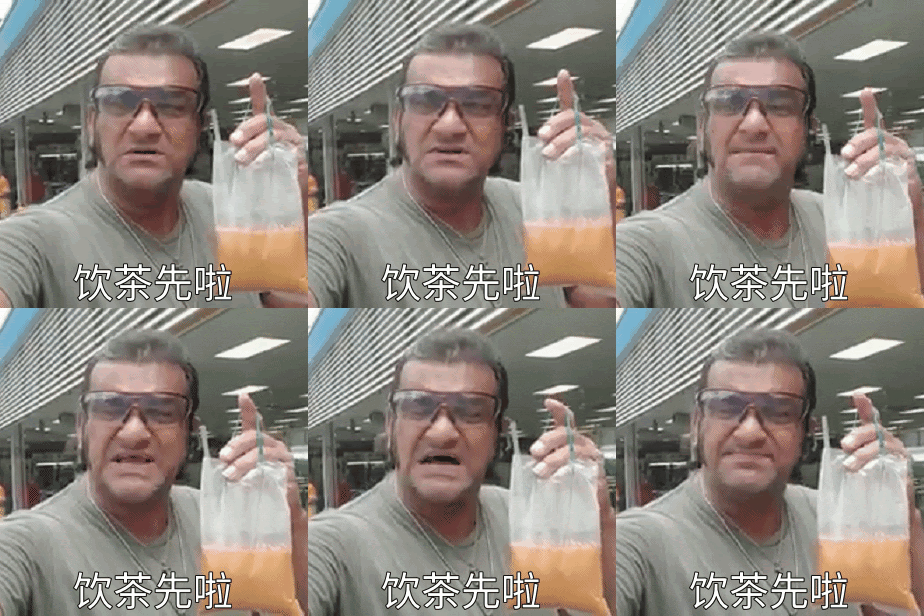
The reason? He posted a video of himself asking his viewers to “go take a break and drink tea at 3pm” using impeccable Cantonese. Thus, he is also known as “yum cha gor” (literally “tea-drinking bro”) to the Chinese netizens.

Gurdip Singh, otherwise known as yum cha gor/饮茶哥/yin cha ge in his most famous video

Versions of the video, recorded over a year ago in 2020, were posted onto the Chinese video platform Bilibili this year, and has since accumulated millions of views.

Chinese netizens not only praised Singh’s fluent Cantonese, but more importantly lauded his attitude towards work-life balance.

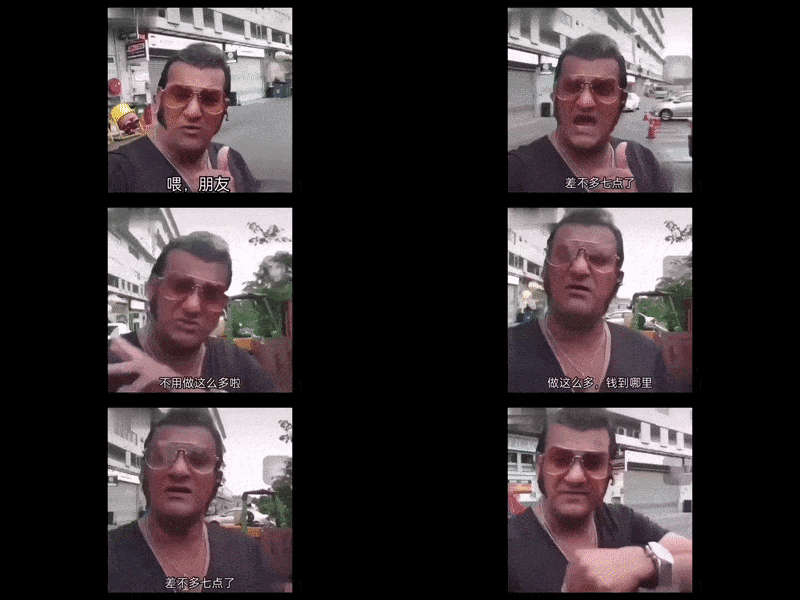
In other videos that catapulted him to stardom, Singh, a ship repair technician, told his viewers, again using Cantonese, to go have a pint after work as it is already 7pm.

Gurdip Singh, otherwise known as yum cha gor/饮茶哥/yin cha ge
Gurdip Singh, otherwise known as yum cha gor/饮茶哥/yin cha ge in one of his earlier videos

It is obvious that Singh’s videos struck a cord with Chinese netizens, who are facing increasing pressure from the infamous “996 work culture” that’s prevalent in many companies.

The term “996” means working from 9am to 9pm, six days a week.

Famous Chinese tech entrepreneurs such as Jack Ma and Liu Qiangdong came under fire previously for asking their employees to contribute more to the company by working harder.

Jack Ma once said in April 2019 that to be able to work on a “996” schedule should be considered a blessing for employees.

Chinese tycoon Jack Ma once said that employees should consider 996 as a blessing.

In the same year, Liu Qiangdong, the founder and CEO of JD.com, a close competitor of Jack Ma’s Alibaba, also said that a dawdled is not his “brother”.

These comments draw the ire of netizens, who feels that Alibaba, JD, and other Chinese tech companies would not have achieved their standings today without the hard work of employees, and yet they are taking it for granted now. In addition, stories of delivery drivers’ long work hour and meagre earnings have further revealed the plight of low level workers in platform service companies.

Observers point out that Singh’s unexpected fame on the Chinese internet reflects the general netizen’s displeasure and anger on the high pressure work environment and tough competition for various social resources.

“Involution”(nei juan/内卷) and “Lying flat” (tang ping/躺平) are the two hottest keywords on the Chinese internet sphere. In the Chinese lexicon, the first term means trapped in a situation where one faces increasingly difficult, yet meaningless competition with others. The second term is the equivalent of accepting defeat and not make any attempt to change one’s situation.

Singh’s videos have become popular memes and the source material for numerous derivative works. In turn, Singh has become the embodiment of Chinese netizen’s unhappiness towards involution, and also their unwillingness to lie fla

Screen cap of Singh’s video and its derivative works on Bilibili

However, just as Chinese netizens celebrate Singh’s newly achieved fame and representation, media platforms that represented their own interests were quick to act too.

Singh’s video first went viral in May. By late May, representatives from popular Chinese media platforms such as Bilibili and Douyin (Chinese TikTok) have approached Singh and helped him set up his official channels. In the first week of June, Chinese social media giant Tencent has helped Singh set up his WeChat channel.

Insider information suggests that apart from helping Singh setting up his channels, these platforms are also trying to increase the hype surrounding Singh through means such as actively promoting his videos and channel.

All these suggest that Singh is becoming another trendy tool for Chinese media platforms to attract more users in the increasingly competitive arena. In other words, the involuted media platforms has ironically turned the icon of anti-involution into a tool for involution.

Needless to say, when the hype dies down and his usefulness in attracting users run out, Singh will no doubt be cast aside by the platforms, who are constantly searching for the next big hit.

Be it anti-involution or pro-involution, Singh seems to have no preference for either. In the numerous interviews that have surfaced after his newfound fame, Singh was never opposed to collaborating with media platforms to promote himself.

However, when it comes to his full time job as a ship repair technician, Singh revealed that he insisted on having a tea break in the afternoon despite his boss’s displeasure.

In one of his videos, Singh said “Time to take a break! Work so hard for what? Your boss also won’t cherish you.”

The same could be said of the media platforms now. When the hype is over, media platforms will go on the hunt for the next internet sensation. There is no cherish for the obsolete ones too.